From bridges crossing the Atlantic coast to mountain roads, historic railway structures and modern cable cars

How people have found ways to connect
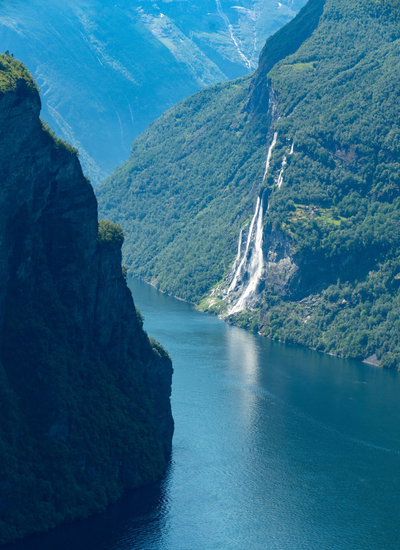
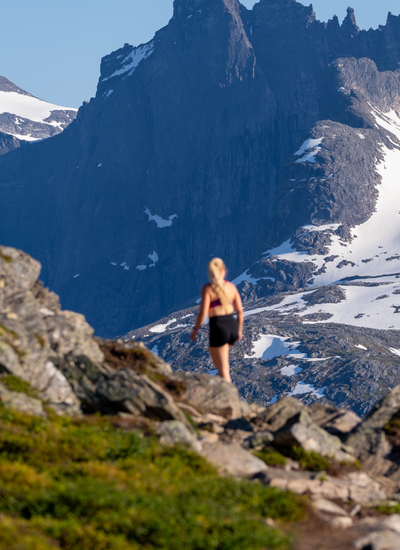
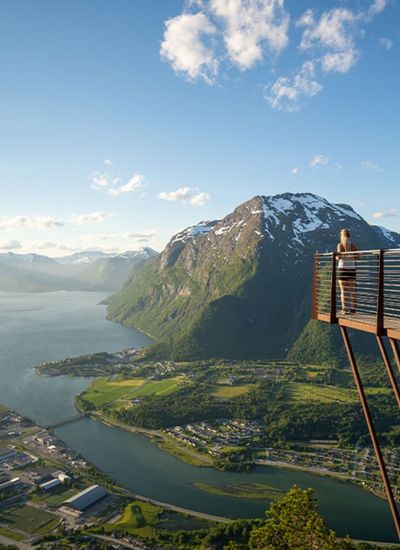
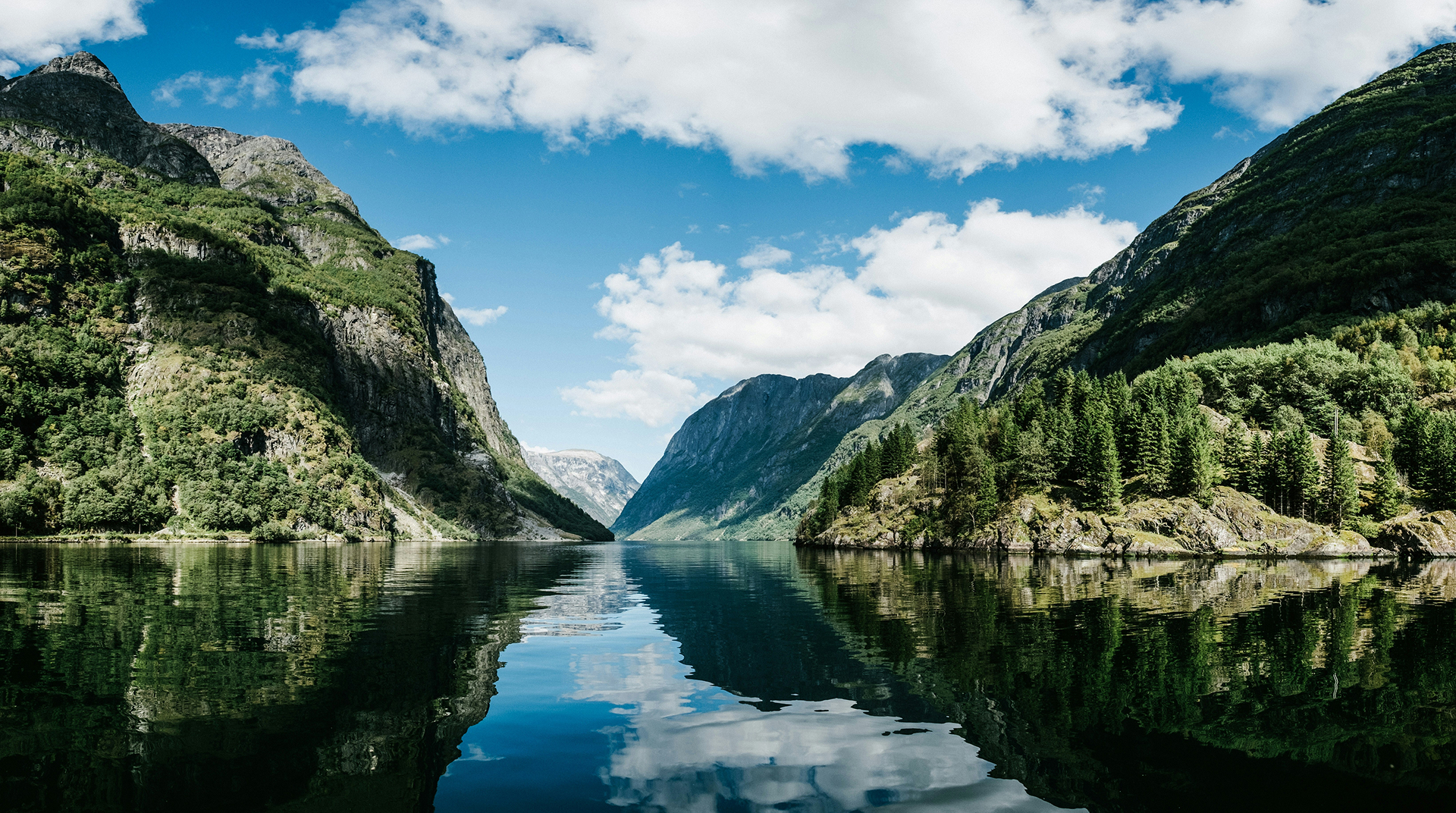
Northwest Norway is known for its dramatic mountains, fjords and coastal landscapes. But the region is also a destination for those interested in the engineering and architecture that make these landscapes accessible. From bridges crossing the Atlantic coast to mountain roads, historic railway structures and modern cable cars, the journey through the region reveals how people have found ways to connect some of Norway's most challenging terrain.
The Atlantic Road and Trollstigen are among the best-known road experiences in the region. Further inland, the Rauma Railway follows the Romsdalen valley through steep mountains and narrow passages, while Romsdalsgondolen connects Åndalsnes with the mountain landscape above.
For travellers exploring Northwest Norway, Åndalsnes is a natural place to stop, spend the night and experience these different forms of engineering and architecture in one destination.
The Atlantic Road: engineering between land and sea
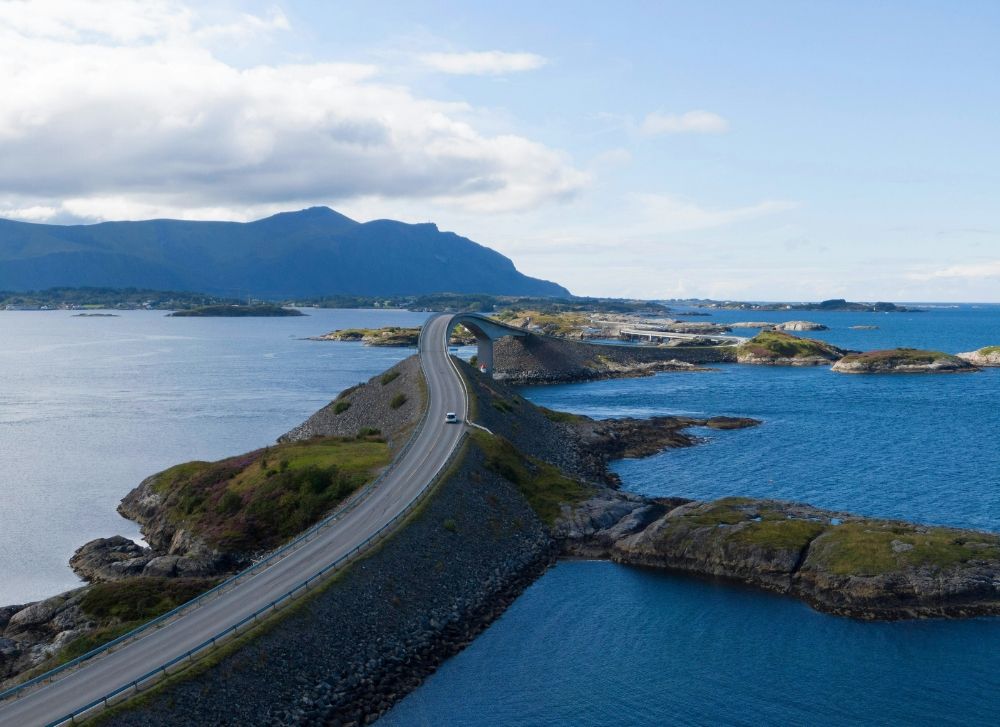
The Atlantic Road is one of Norway's most spectacular coastal drives, stretching 8.3 kilometres across eight bridges that connect Averøy with the mainland across Hustadvika. The road winds between islands and skerries, with the open sea and rugged coastline providing a dramatic backdrop. In September 2005, it was named Construction of the Century 1905–2005 in Møre og Romsdal. It has also been named the world's finest road trip by the British newspaper The Guardian.
Along the way, stops such as Eldhusøya and Askevågen offer opportunities to walk, enjoy the coastal scenery and experience the changing weather around Hustadvika.
For travellers continuing inland, the Atlantic Road is also the beginning of a longer journey through Northwest Norway. From the coast, the route leads towards Åndalsnes and Romsdalen, where the landscape changes from exposed islands and open sea to steep mountains, deep valleys and remarkable engineering landmarks.






Trollstigen: a road shaped by the mountains
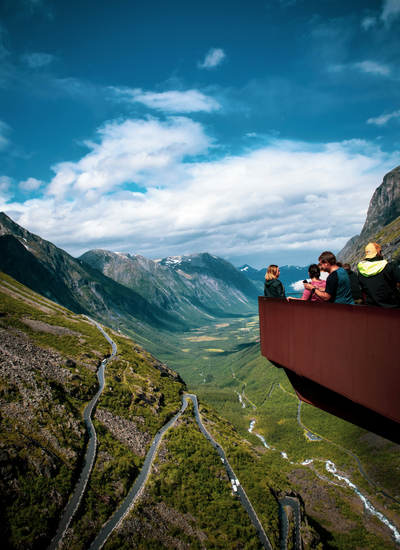
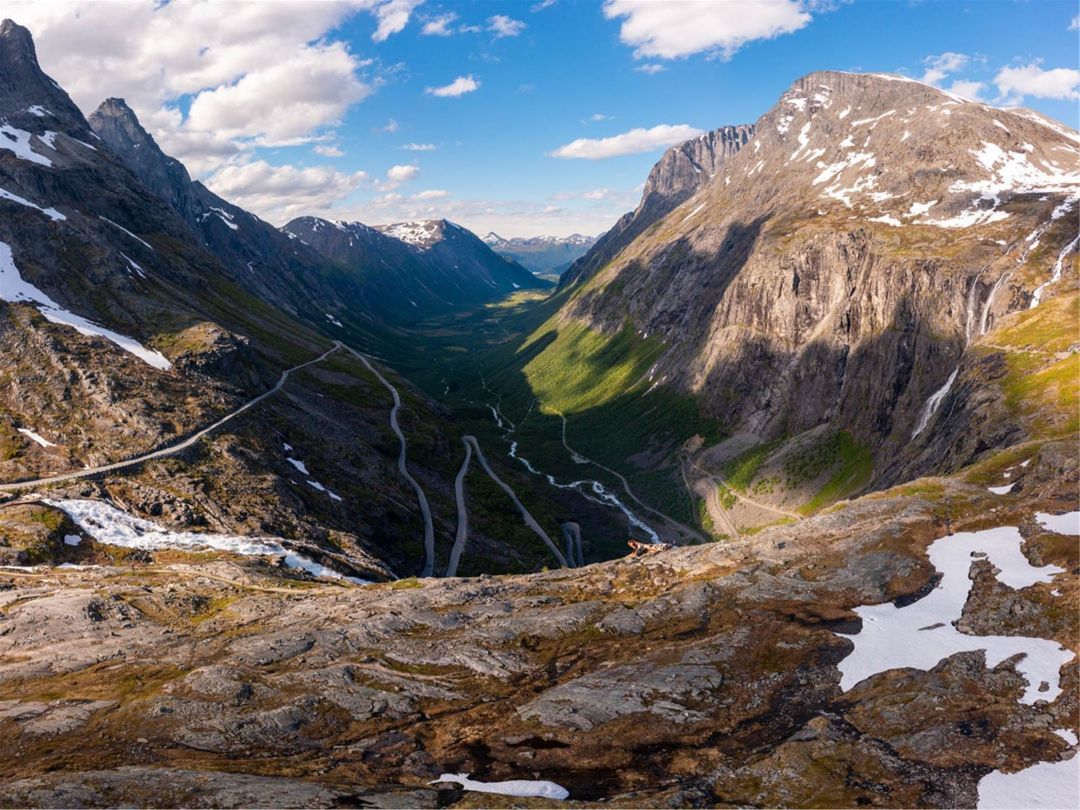
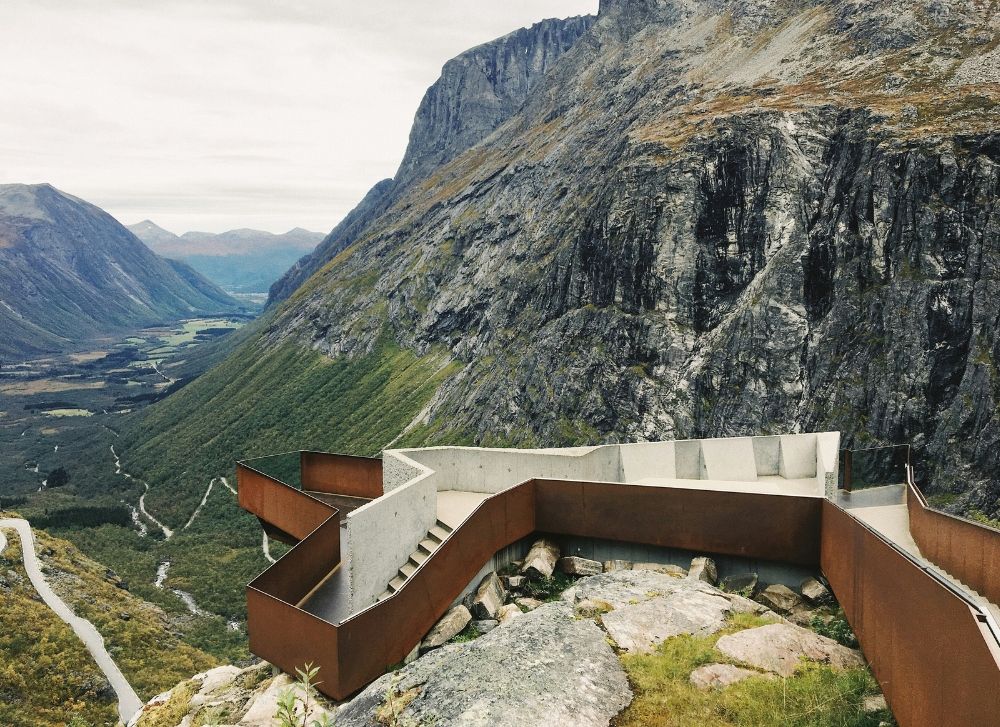
Trollstigen connects Åndalsnes with Valldal in Sunnmøre and climbs through eleven hairpin bends on the mountainside. The road is part of the Norwegian Scenic Routes network, where landscape and designed viewpoints are treated as parts of the journey.
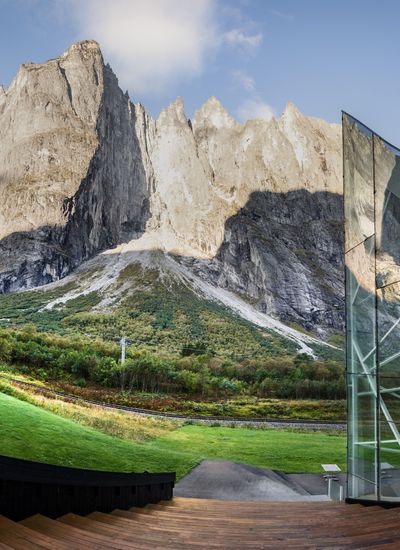
At the top, Trollstigen Plateau provides paths, bridges and viewing areas above the road. The architecture is deliberately restrained: it frames the valley, the mountains and Stigfossen rather than competing with them. The waterfall, which drops near the road, is one of the defining sights along the route.
For visitors driving from the Atlantic Road, Trollstigen offers another perspective on the region's engineering. Here, the challenge is no longer crossing exposed coastal islands, but navigating steep mountain terrain and connecting the valley with the surrounding landscape.
From Trollstigen, the journey continues towards Åndalsnes, where the mountains, railway and river create another setting for exploring the engineering history of Northwest Norway.
The Rauma Railway: engineering through the valley
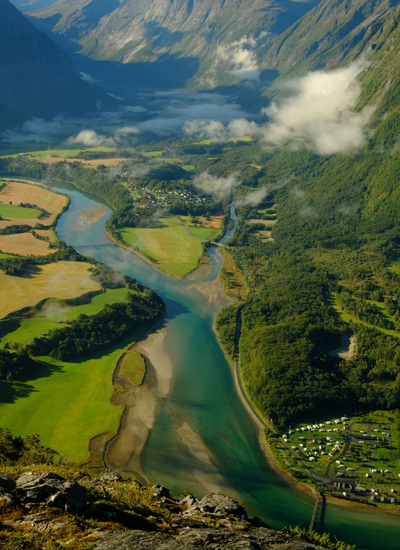
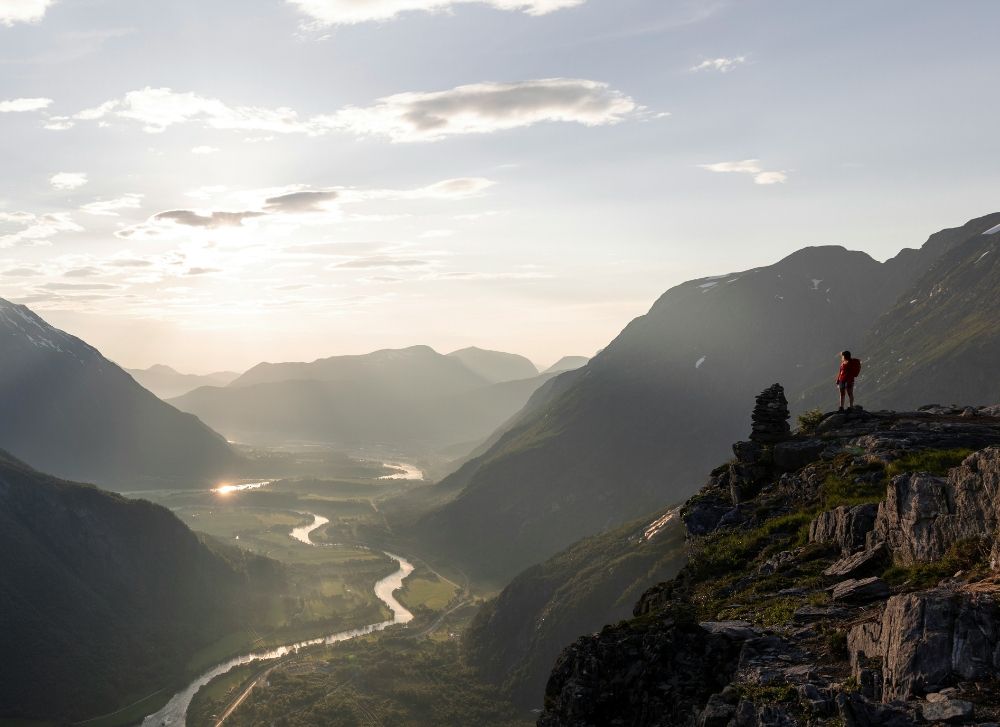
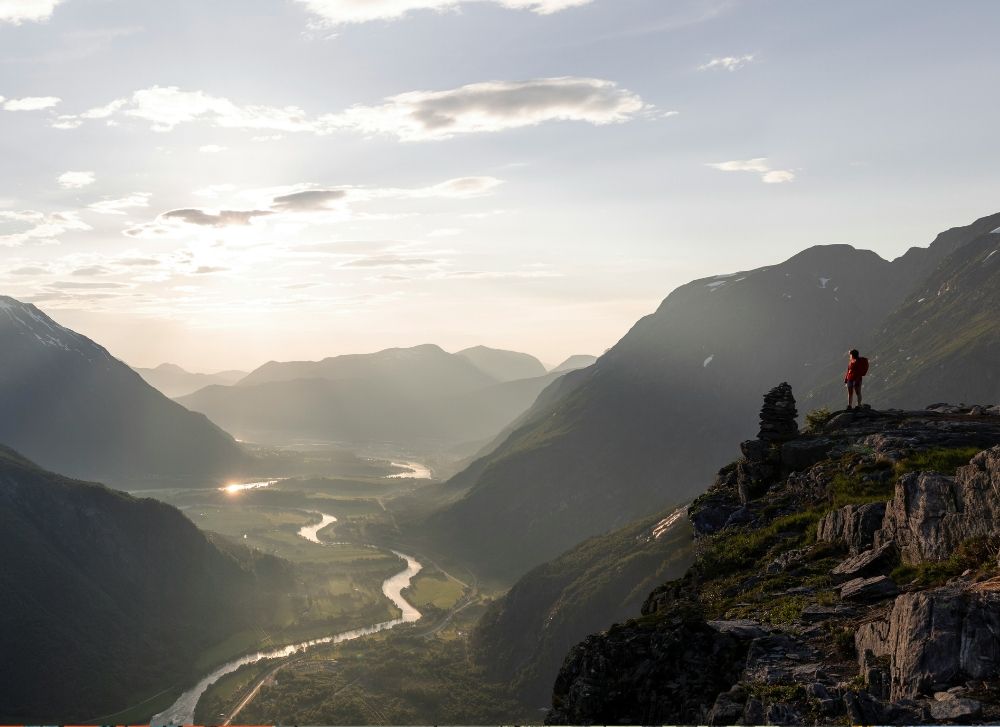
The Rauma Railway was built to connect the Romsdalen valley with the wider railway network. Construction began in 1912, and the railway officially opened in 1924. Its route follows the Rauma River through a landscape of steep mountains, waterfalls and narrow valley spaces.
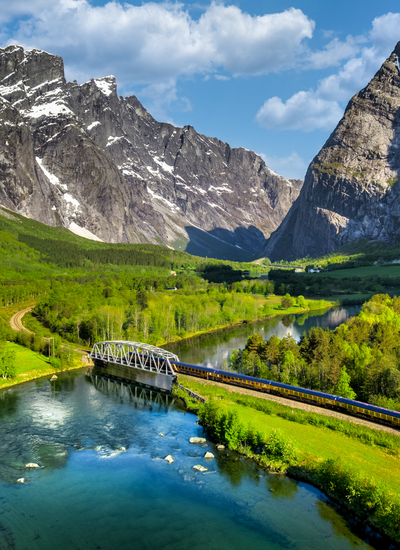
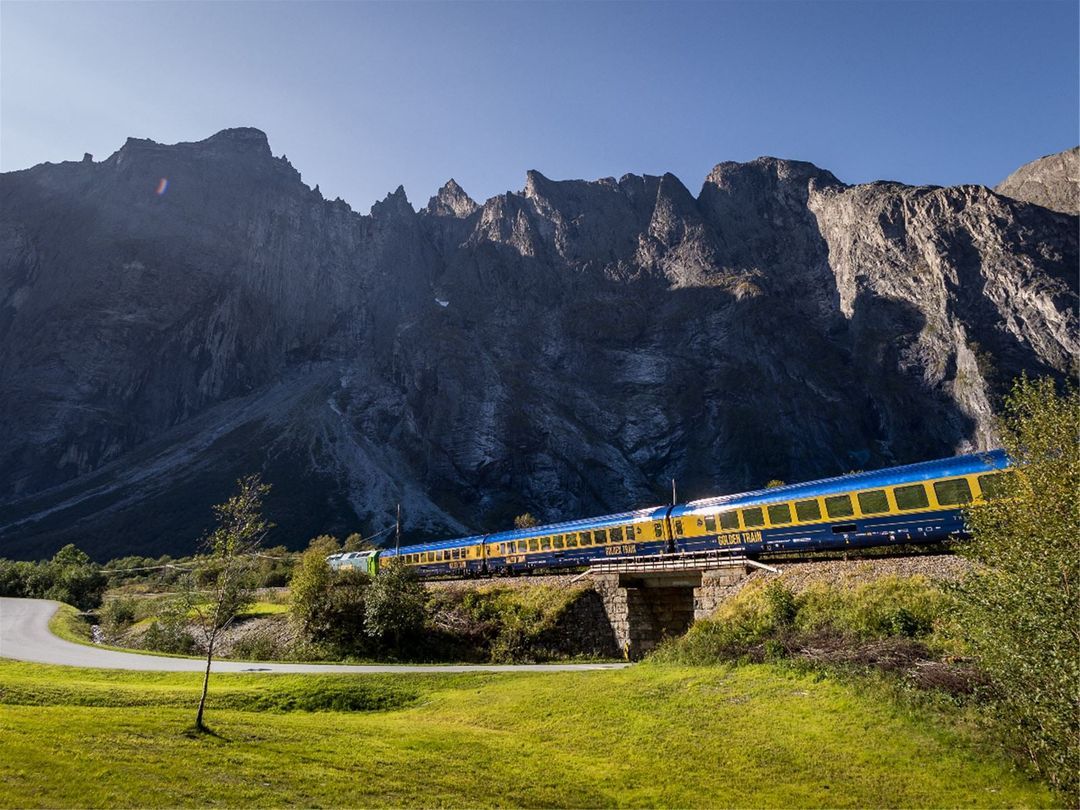
The Golden Train makes this railway history part of a visitor experience. The journey starts in Åndalsnes and travels through Romsdalen towards Bjorli before returning. Along the way, the route includes views of the Rauma River, Trollveggen, Kylling Bridge, Verma Waterfall, Kors Church and Bjorli. Storytelling about the railway, the landscape and local history is part of the journey.
The railway is also a record of the engineering required to cross difficult terrain. Bridges, tunnels and carefully planned curves made it possible to overcome the steep elevation differences in the valley and connect Åndalsnes with the railway network.
Among the most remarkable structures are Kylling Bridge and Stuguflåten Bridge, both built in stone. Their construction reflects the challenges of building a railway through a landscape where the terrain leaves little room for conventional routes.
The Rauma Railway is therefore more than a scenic train journey. It is an opportunity to experience the architecture and engineering that made the railway through Romsdalen possible.

Kylling Bridge and Stuguflåten Bridge: railway architecture in stone
Kylling Bridge is one of the most distinctive structures along the Rauma Railway. Built in a curve above the Rauma River, the stone bridge combines railway engineering with a carefully shaped architectural form.
Construction took place between 1913 and 1923. The bridge is 76 metres long and rises approximately 59 metres above the river. Its main arch spans 42 metres, while the structure is built from granite quarried from the nearby mountain.
The bridge is notable not only for its size, but also for the way it fits into the surrounding landscape. Its curved alignment, stone construction and position above the river make it one of the most photographed railway bridges in Norway.
Kylling Bridge is also part of the railway's wider engineering system. Together with the nearby Stavem Tunnel and Kylling Tunnel, the bridge forms part of a railway curve designed to overcome the elevation difference between the valley floor and the higher terrain.
Further along the railway, Stuguflåten Bridge provides another example of stone construction in difficult terrain. The bridge is 54.1 metres long and includes a main arch spanning the river. Construction began in 1919, with the main arch completed in 1922 and the bridge finished around the end of 1923.
Together, these bridges show how the Rauma Railway was shaped by the landscape. Their stone arches, carefully engineered curves and placement along the river make them important landmarks for visitors interested in railway history and architecture.
The Golden Train provides a convenient way to experience these structures as part of the journey through Romsdalen.
Romsdalsgondolen and Eggen Restaurant: building on the mountain
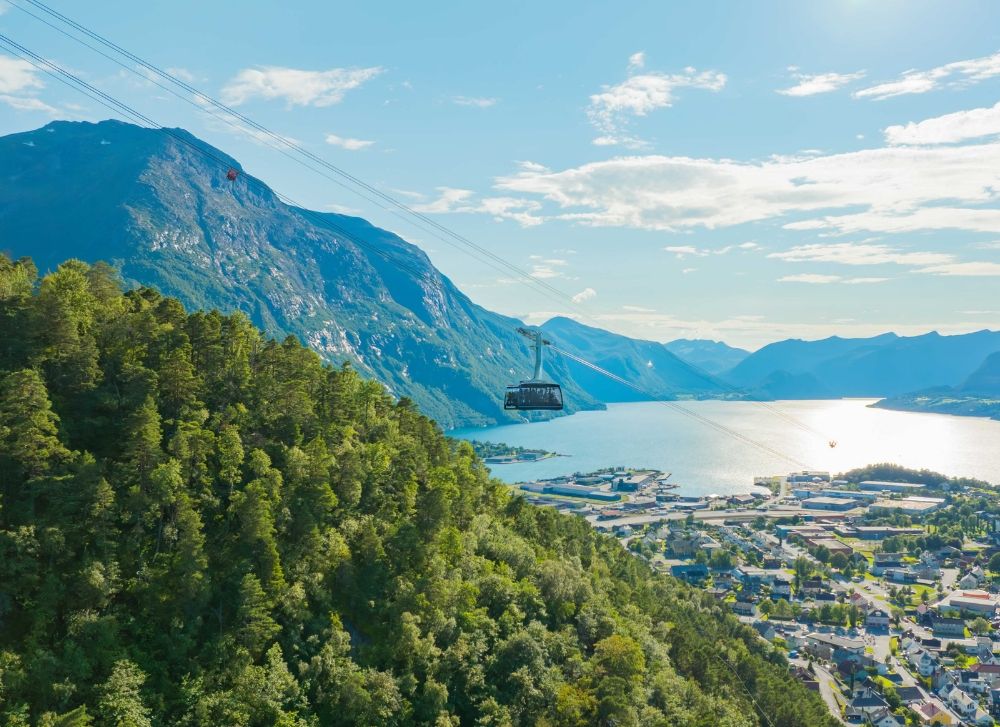
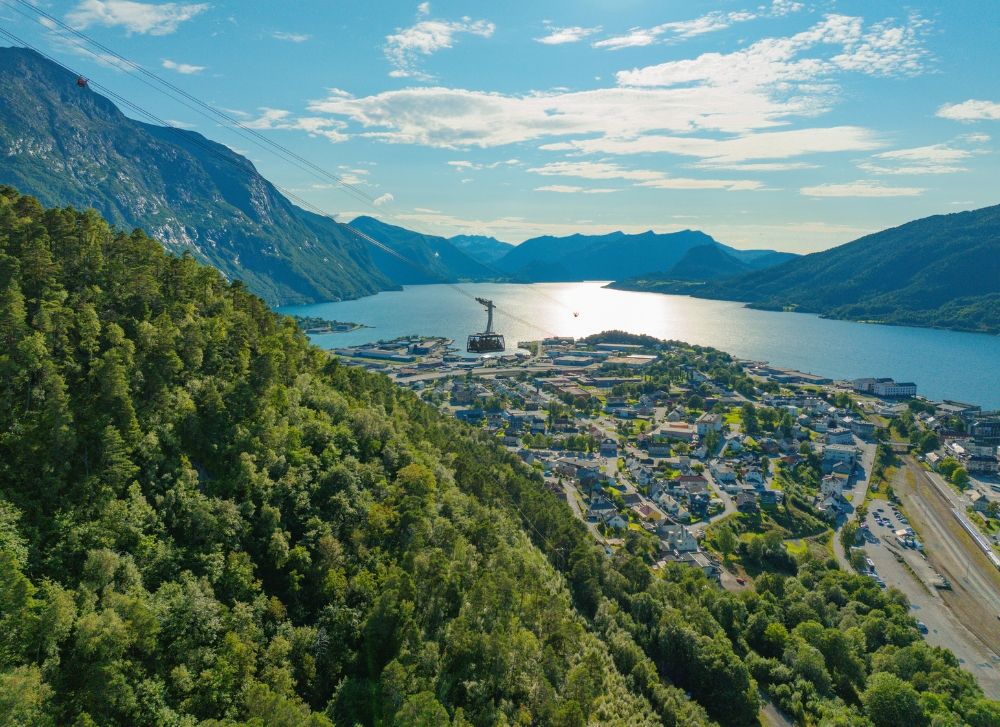
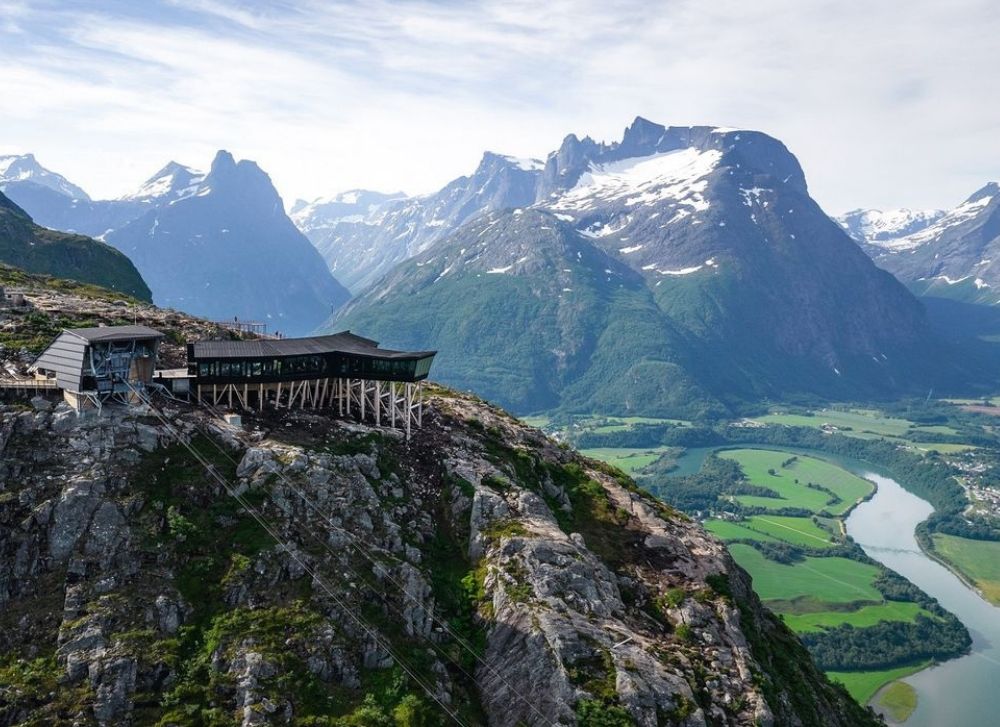
At Åndalsnes, Romsdalsgondolen makes the mountain landscape accessible without requiring a long climb from the town. The cable car reaches Nesaksla at approximately 708 metres above sea level, where Eggen Restaurant is located beside the upper station.
The gondola and restaurant are also part of the architectural story. The project used prefabricated wooden modules, reversible installations and foundation solutions designed to reduce visible intervention in the mountain.
A lack of road access to the construction area created considerable logistical challenges. Materials were transported to the mountain by helicopter, while a 30-metre crane installed on the rock helped with the construction and reduced the need for helicopters during assembly.
Much of the construction used prefabricated wooden modules. The buildings were placed on pillars drilled into the rock, avoiding the need for blasting around the restaurant or conventional concrete foundations.
An example of how engineering, architecture and logistics can be adapted
The installations for Romsdalsgondolen and Eggen Restaurant were designed to be reversible, allowing them to be removed in the future without leaving visible damage to the terrain. Steel and glulam were used in place of large amounts of concrete, while the construction process included an environmental plan and an environmental adviser.
Infrastructure was also designed to reduce visible intervention. Instead of laying water, sewage and electricity across the mountain, a hole was drilled from the industrial area at Nesstranda by the fjord up towards the restaurant. This provides infrastructure through the mountain rather than across the surrounding terrain.
The restaurant's exterior is designed as an atrium, allowing the building to accommodate different events, including outdoor concerts and performances, in the mountain surroundings.
These solutions make Romsdalsgondolen more than a transport link. The construction itself is an example of how engineering, architecture and logistics can be adapted to a demanding mountain environment.

Ålesund: A city rebuilt in Art Nouveau
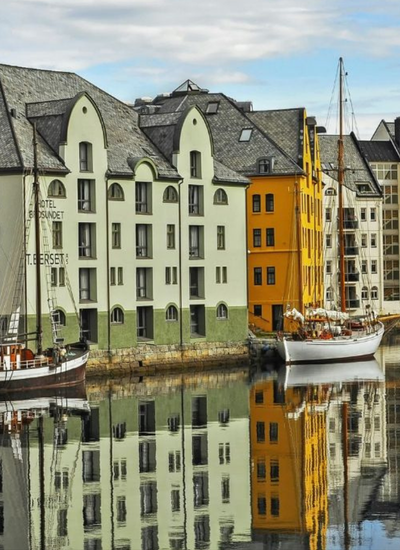
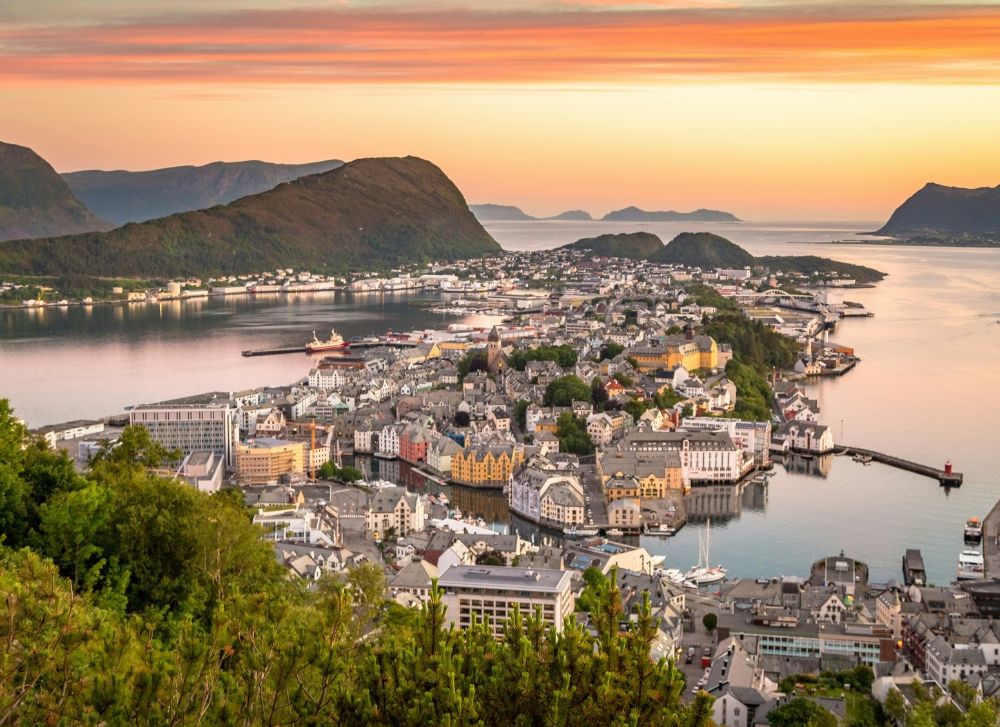
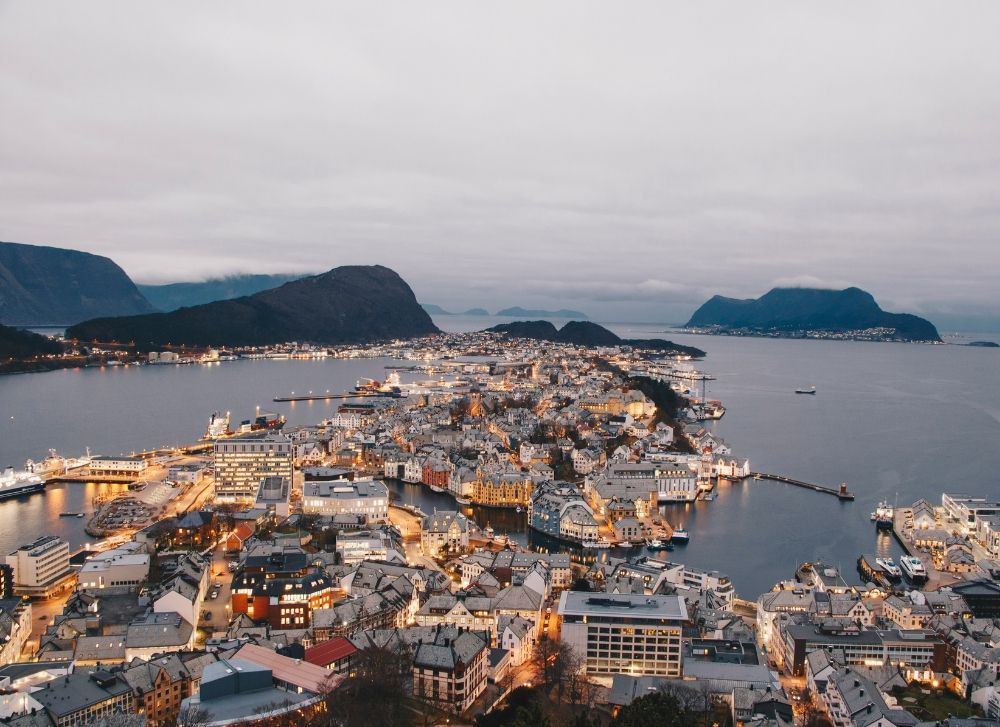
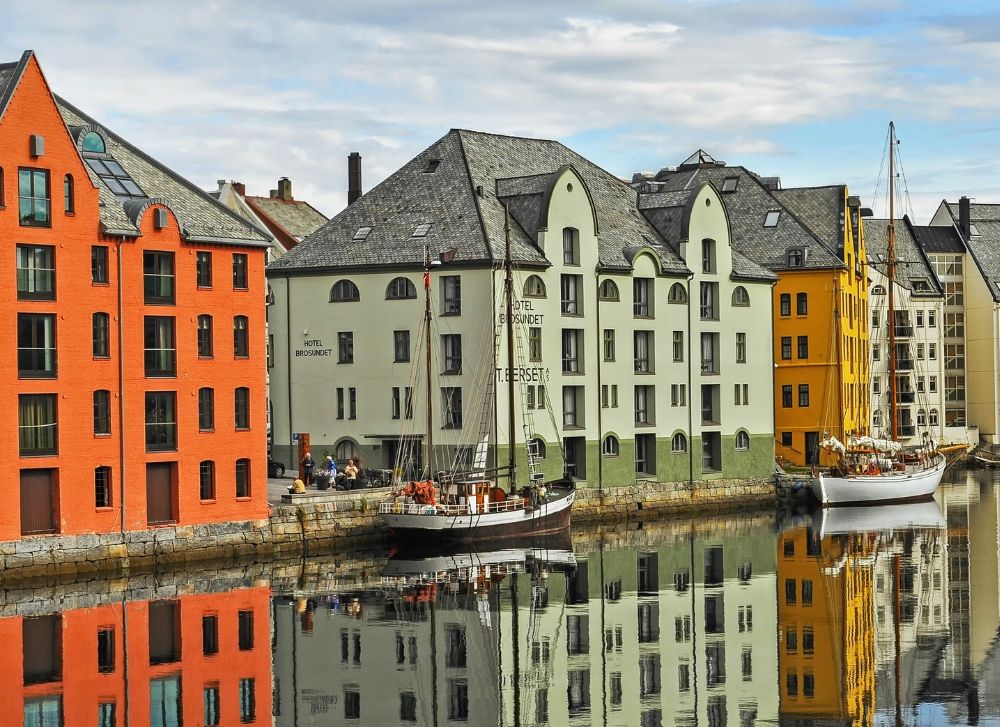
Ålesund adds a different kind of architecture to the route. After a city fire in January 1904, the centre was rebuilt in stone and masonry. The result is a concentrated urban landscape associated with Art Nouveau, or Jugendstil, with towers, spires, ornament and detailed facades.
The best way to understand the city is on foot. Look closely at the buildings around the centre, then visit Jugendstilsenteret and KUBE for more context. The architecture is not defined by one detail alone. Its character comes from the overall expression of the buildings and from the way different facades form a coherent cityscape.
Ålesund can also be viewed from above. The steps to Aksla lead from the city park to a panoramic viewpoint, while the canals and waterfront offer another perspective on the buildings.
For visitors arriving through Ålesund or planning a coastal road trip, the city can be the architectural beginning of a route towards the mountains of Åndalsnes.
Åndalsnes as a base: connect the Atlantic Road, Trollstigen and the railway
Åndalsnes is a natural base for travellers exploring the roads, railways and engineering landmarks of Northwest Norway. For visitors driving the Atlantic Road, continuing towards Åndalsnes adds a different landscape to the journey, from coastal islands and bridges to the steep mountains and waterfalls of Romsdalen.
Trollstigen connects the two experiences with a spectacular mountain road between Valldal and Åndalsnes when open. Once in Åndalsnes, visitors can leave the car behind and explore further by train or cable car. The Golden Train follows the Rauma Railway through the valley, while Romsdalsgondolen connects the town with Nesaksla and Eggen Restaurant.
Staying overnight makes it easier to combine these experiences with scenic drives and mountain visits without rushing between destinations. Hotels and camping provide options for different travel styles, making Åndalsnes a practical stop for travellers continuing between the Atlantic coast, the fjords and the mountains inland.
Plan a route through Northwest Norway
A route through Ålesund, the Atlantic Road, Åndalsnes and the surrounding mountain roads brings together several ways of understanding Northwest Norway.
Ålesund shows how a city was rebuilt through a shared architectural language. The Atlantic Road and Trollstigen demonstrate how roads and viewpoints can respond to exposed coastline and steep mountains. The Rauma Railway reveals the scale of the work required to connect the valley, while Kylling Bridge and Stuguflåten Bridge show the craftsmanship behind the railway's stone structures.
At Åndalsnes, Romsdalsgondolen adds a newer link between town and mountain, with Eggen Restaurant offering a place to experience the landscape from above.