
An adventure along the Rauma Railway


Impressive landmarks and dramatic landscapes
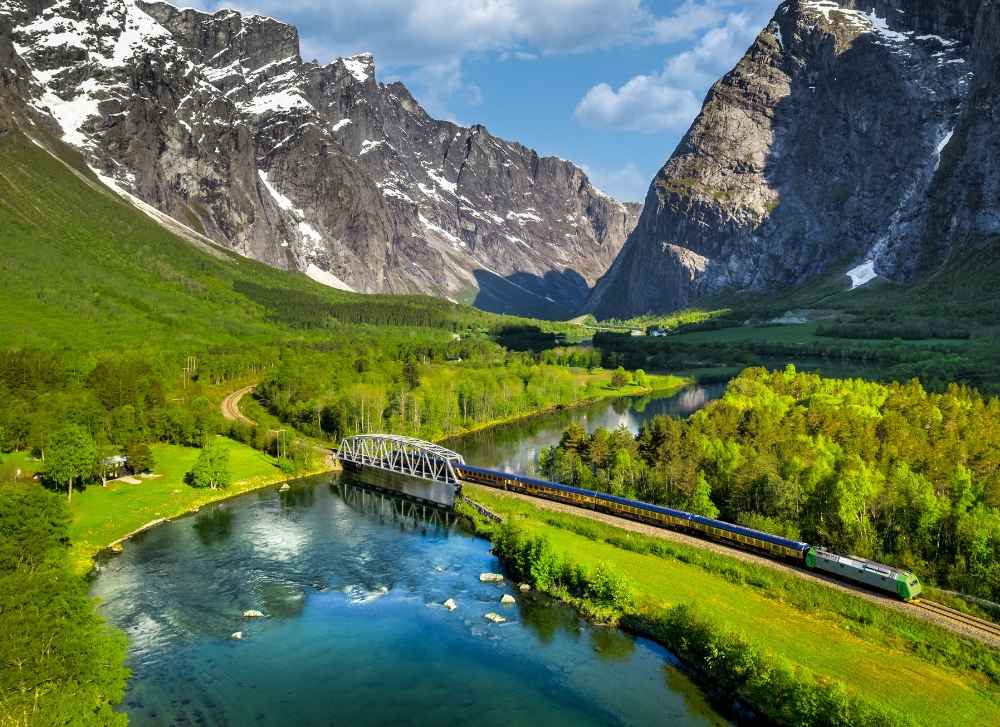
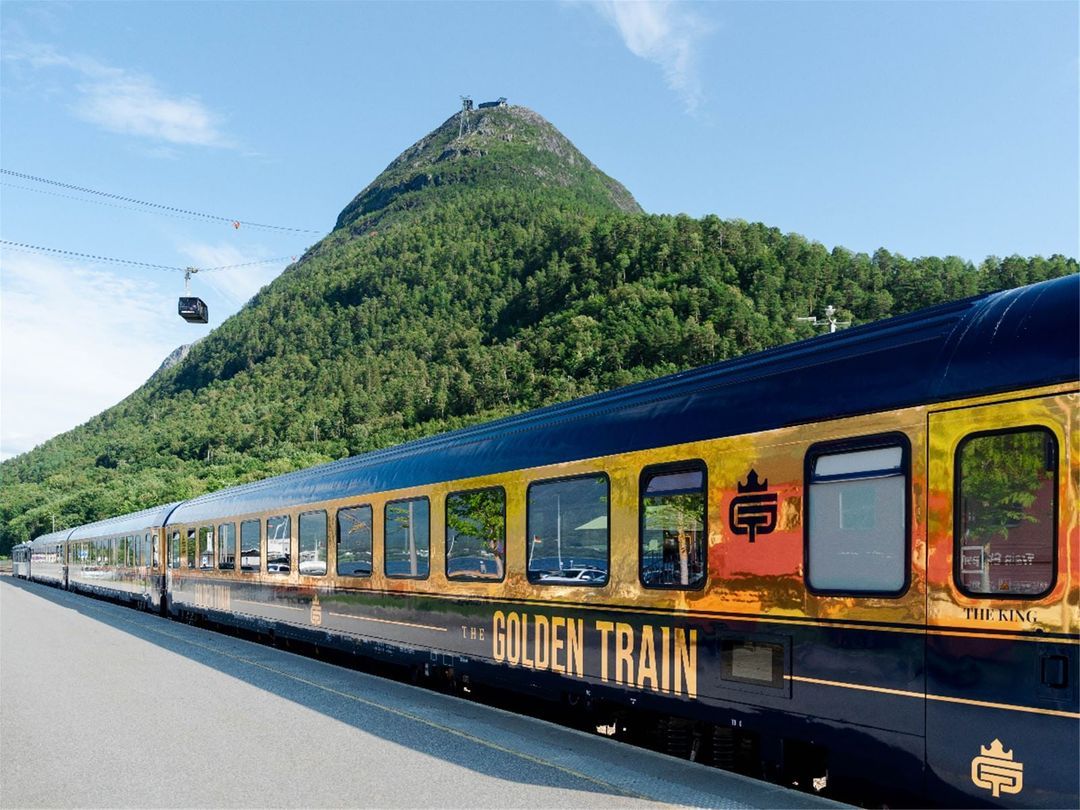
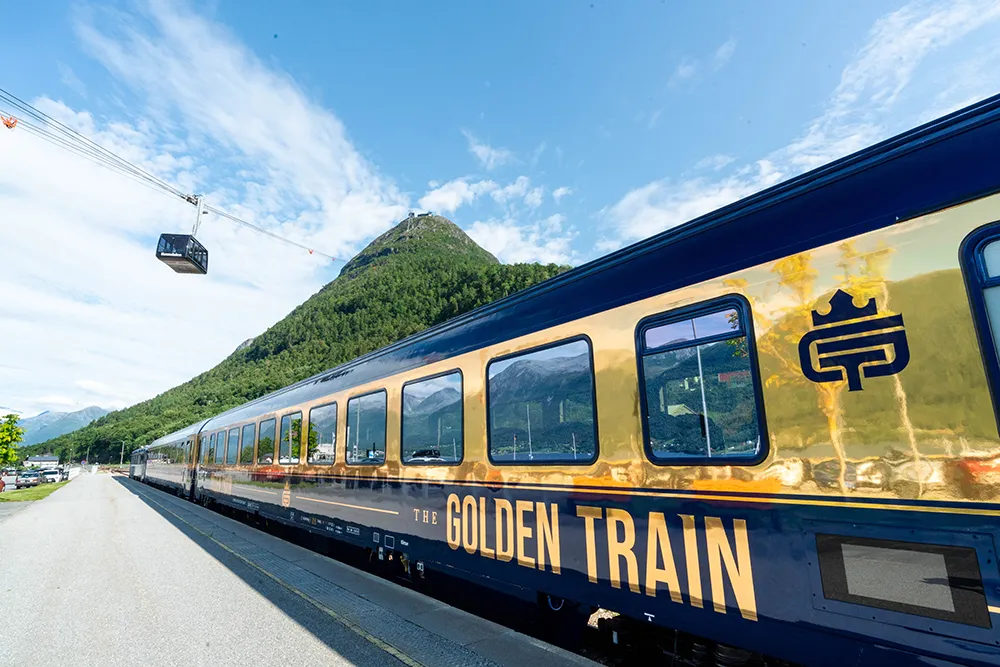
The Golden Train takes visitors on a scenic journey through Romsdalen, following the Rauma Railway between Åndalsnes and Bjorli. Described by Lonely Planet as "Europe's most scenic train journey", the experience combines spectacular scenery with storytelling about the railway, the landscape and local history.
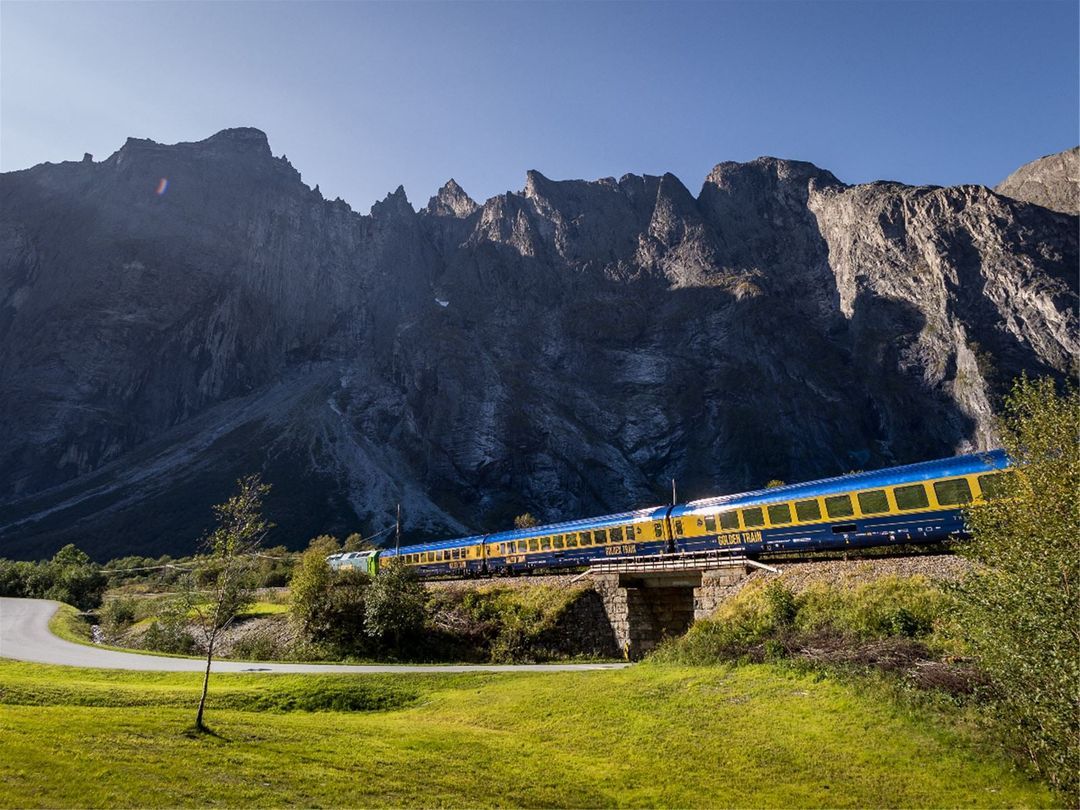
The route passes through a dramatic landscape of steep mountain walls, waterfalls, deep valleys and spectacular river scenery. Along the way, passengers experience some of the region's most impressive landmarks, including Trollveggen, the Rauma River and Kylling Bridge.
Combining natural scenery, railway history and storytelling, the journey offers an accessible way to explore the mountains around Åndalsnes. For visitors who want to experience Romsdalen without hiking, the Golden Train provides a memorable alternative.
The Rauma Railway
The Golden Train operates along the Rauma Railway, which connects Åndalsnes with Dombås.
The railway officially opened in 1924, providing a connection between the coastal region and the national railway network. The route follows the Rauma River through the valley, passing dramatic mountain scenery and several important engineering landmarks. The railway was built through difficult terrain, requiring bridges, tunnels, and carefully designed sections of track.
Today, the journey is known for its spectacular views and remains an important part of the visitor experience in Romsdalen.





The Golden Train experience
The Golden Train offers a dedicated tourist experience along the Rauma Railway. The journey combines scenic views with live storytelling about the railway, the surrounding landscape and the history of the region. Passengers can learn about the landmarks along the route and the events that shaped Romsdalen. The experience is particularly attractive to travellers who want to enjoy the mountain scenery without spending a full day hiking.
The train operates between Åndalsnes and Bjorli, with a round trip taking approximately two and a half hours. Departure times and the number of daily departures vary, so visitors should check the current timetable before planning their trip.
Trollveggen from the train
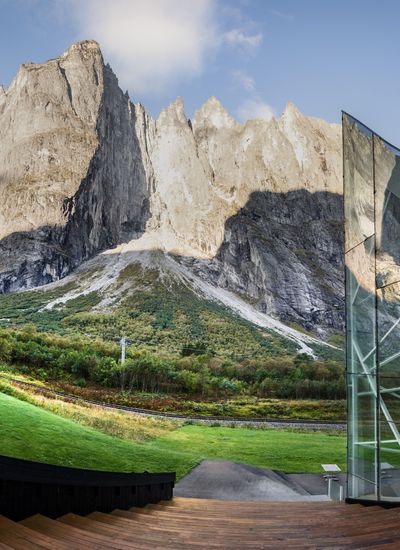
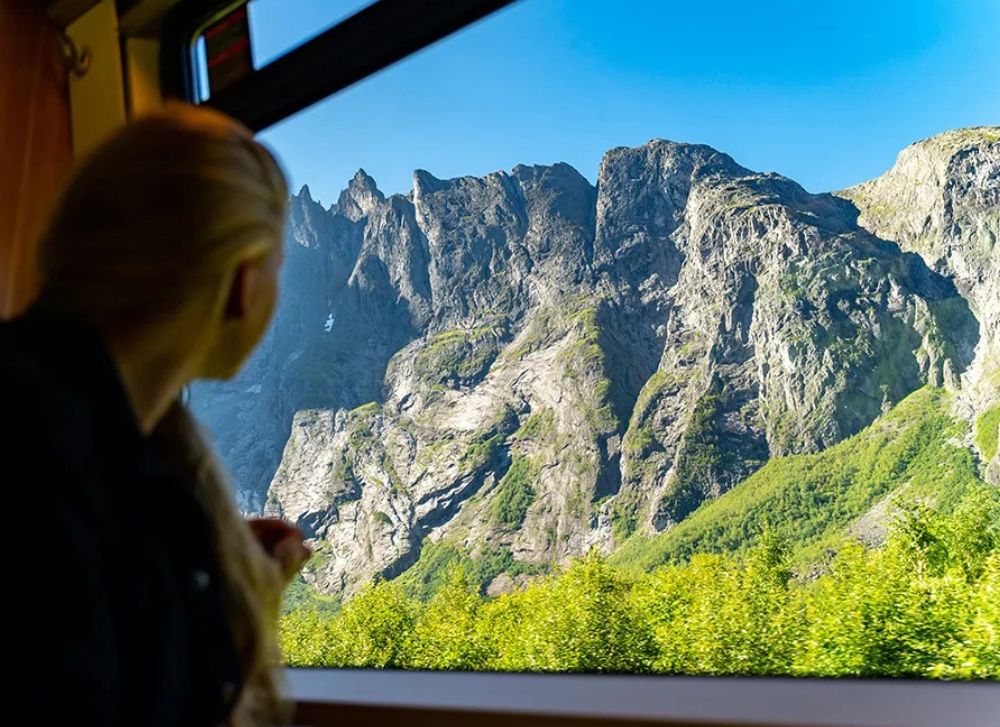
One of the most impressive landmarks along the route is Trollveggen, or the Troll Wall. The enormous mountain wall rises above the Romsdalen valley and forms a dramatic backdrop to the railway. As the train passes through the valley, passengers can see the steep rock face and surrounding peaks.
The railway offers a different perspective from the road, allowing visitors to experience the mountain landscape as they travel through the valley. Trollveggen is also an important part of the region's climbing history, making it a particularly interesting landmark for visitors.
The combination of the railway and the towering mountain wall makes this one of the most memorable sections of the journey.
The Rauma River
The Rauma River follows the railway through much of Romsdalen. Its emerald-green waters, surrounded by mountains and vegetation, create a striking contrast with the steep rock faces above.
The river is an important feature of the valley and forms part of the landscape that makes the railway journey so distinctive. Passengers can follow its course as the train travels through the valley, passing different sections of the mountain landscape.
The scenery changes throughout the journey, from wide valley sections to narrower stretches framed by steep mountains.
Kylling Bridge
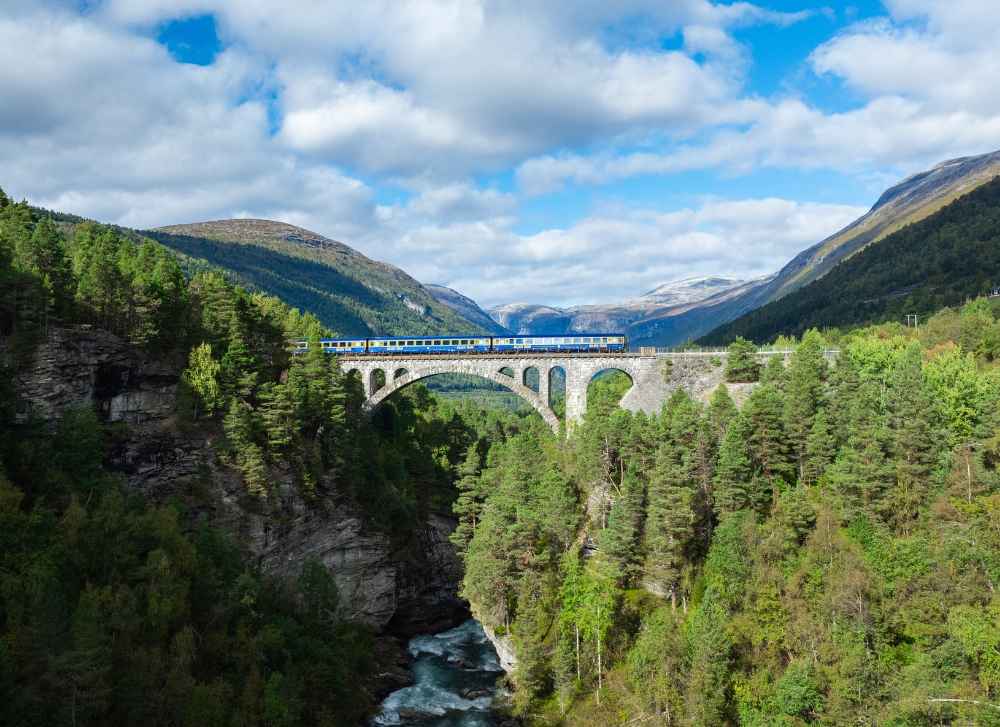
Kylling Bridge is one of the most recognisable engineering landmarks along the route. The bridge is approximately 76 metres long and rises around 59 metres above the Rauma River, with a main arch spanning approximately 42 metres. Built using local granite, it forms an elegant curve through the mountain landscape.
Construction began in 1913 and was completed in 1921, making the bridge an important part of the railway's history. Its position high above the river, surrounded by mountain scenery, makes it particularly impressive.
Nearby tunnels, including the Kylling and Stavem tunnels, form part of the railway's carefully engineered route through the valley. The combination of the bridge, river and mountain landscape makes this one of the most memorable sections of the journey.
Verma Waterfall
Verma Waterfall is another landmark along the Rauma Railway. The waterfall cascades down the mountainside near the railway, adding to the dramatic scenery along the route.
The surrounding landscape features steep slopes, rugged rock formations and the river valley. Together with the region's other natural attractions, the waterfall contributes to the varied scenery passengers experience as they travel through Romsdalen.


The Golden Train and Norway's wartime gold transport
The Rauma Railway played an important role in one of Norway's most dramatic stories from the Second World War: the evacuation of the country's gold reserves following the German invasion in April 1940. Approximately 50 tonnes of gold were evacuated from Oslo in a secret operation known as the Norwegian Gold Transport. The gold was first carried by lorry to Lillehammer before continuing by train along the Rauma Railway to Åndalsnes.
The journey was far from straightforward. The railway became a vital link in the escape, transporting the gold through Romsdalen while the country was under attack. From Åndalsnes, the operation continued by sea, with the gold eventually reaching Britain before being transferred to Canada and the United States. The successful evacuation helped ensure that Norway retained control of its gold reserves during the occupation.
Today, this remarkable episode forms part of the story told aboard The Golden Train. As the train travels through the same valley, passengers can discover how the railway and the people who worked to save Norway's gold became part of the country's wartime history.

A scenic journey through Romsdalen
The Golden Train travels between Åndalsnes, at the end of Romsdalen, and Bjorli, further inland among the mountains. Both destinations offer access to the region’s outdoor attractions, but the train journey provides a different way to experience the landscape without driving.
Along the route, visitors can take in the dramatic mountain scenery, the Rauma River, Trollveggen and engineering landmarks such as Kylling Bridge, while learning about the railway’s history through onboard storytelling.
For travellers staying in Åndalsnes, The Golden Train is a convenient and accessible way to explore Romsdalen and discover the landscape between these two destinations without undertaking a demanding hike.